


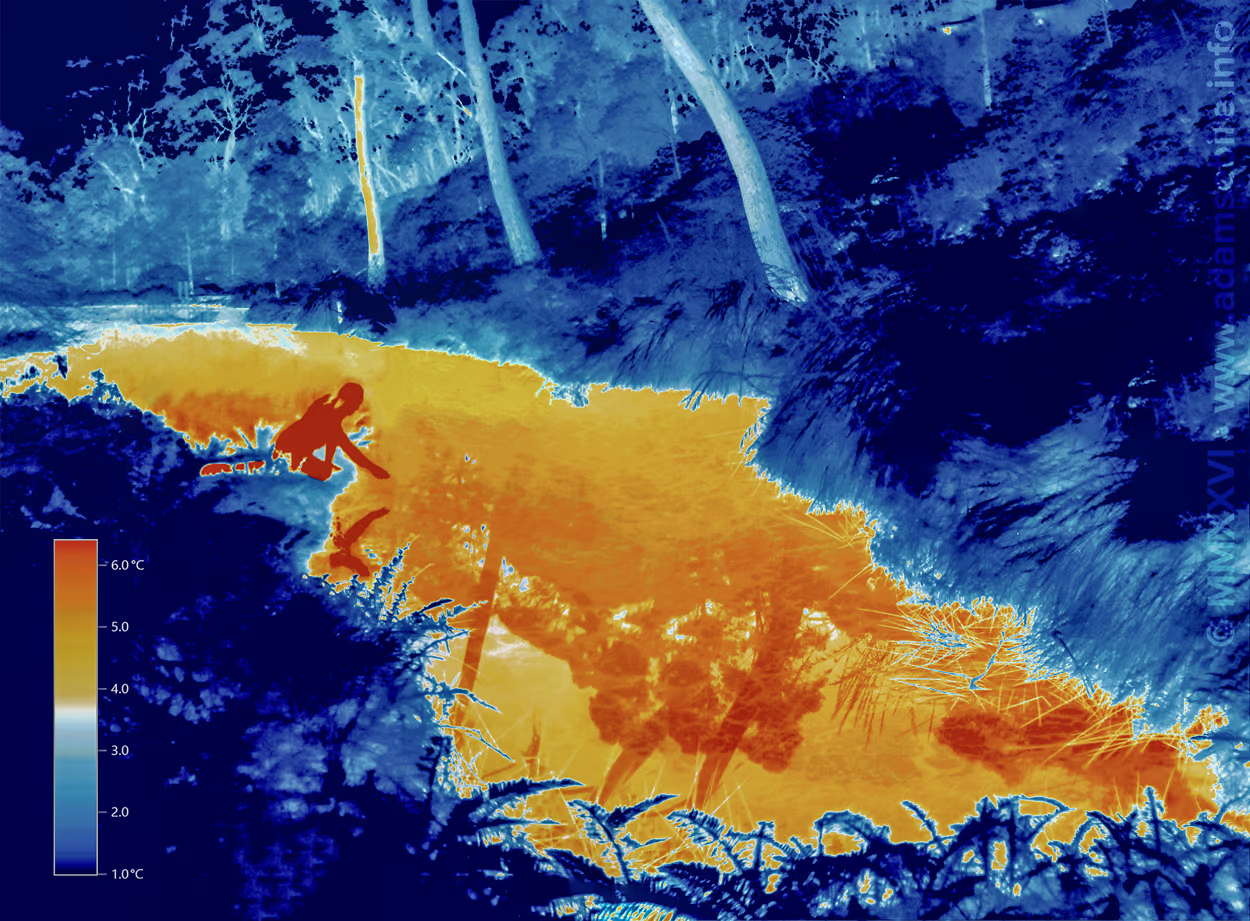
Narcissus by the Reflecting Pool (Infrared Image 00662-5) (2015)
About the work: This thermographic (infrared) image was recorded one clear midwinter's night in Blackheath. It uses a thermal imaging camera loaned from UTS climate scientists. I was looking for new visual representations of global warming beyond the usual glaciers, smokestacks, floods and droughts; something that evoked its anthropogenic, human origins; but also from a non-human perspective. In my experiments I discovered thermography could show our species warming the environment — both literally and metaphorically. In this scene the pond had retained enough heat from the day to reflect the atmosphere glowing an eery warm orange. I posed as Narcissus, one of many Greek mythological figures whose stories warn humans against hubris.


The electromagnetic spectrum, including infrared (diagram from CSIRO Australia). Click to enlarge.


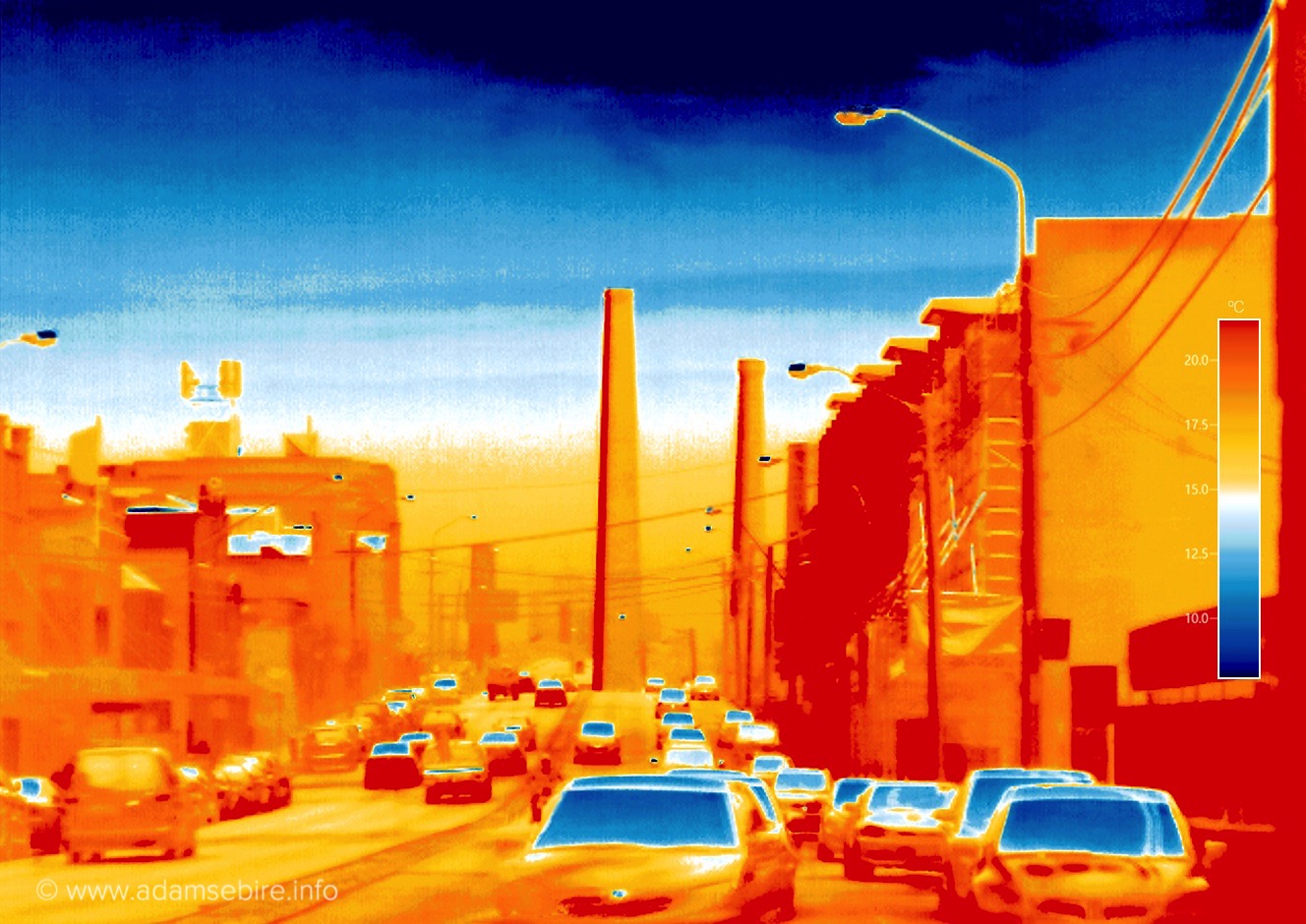


60cm x 180cm, Edition of 6. Price - AUD$2,800.00 : contact 80:20 Artist Agency, Sydney (Director: Bill Seeto)
Scientists have proposed that we've left the Holocene epoch: the 12,000 years of relative climatic stability that enabled human civilisation. Impressions of anthropogenic global warming are recorded here with a thermographic imager during one of the abnormally warm winters here that characterised the early decades of the Anthropocene.
(Enlargement of the image reveals the raw heat data values of each pixel; thermal imagers can export either an image or a data spreadsheet; or as here, both.)
Narcissus by the Reflecting Pool (Infrared Image 00662-5) (2015)
About the work: This thermographic (infrared) image was recorded one clear midwinter's night in Blackheath. It uses a thermal imaging camera loaned from UTS climate scientists. I was looking for new visual representations of global warming beyond the usual glaciers, smokestacks, floods and droughts; something that evoked its anthropogenic, human origins; but also from a non-human perspective. In my experiments I discovered thermography could show our species warming the environment — both literally and metaphorically. In this scene the pond had retained enough heat from the day to reflect the atmosphere glowing an eery warm orange. I posed as Narcissus, one of many Greek mythological figures whose stories warn humans against hubris.
Images & text © MMXXVI adamsebire@gmail.com
DMI DataMining of photos & videos prohibited except for search engine indexing.
Update October ’26: Site migration to
100% renewable energy webservers in Europe is complete!
Older project content is still being ported across.